EN
 ZH
Best Treatments for Travel Fatigue That Work
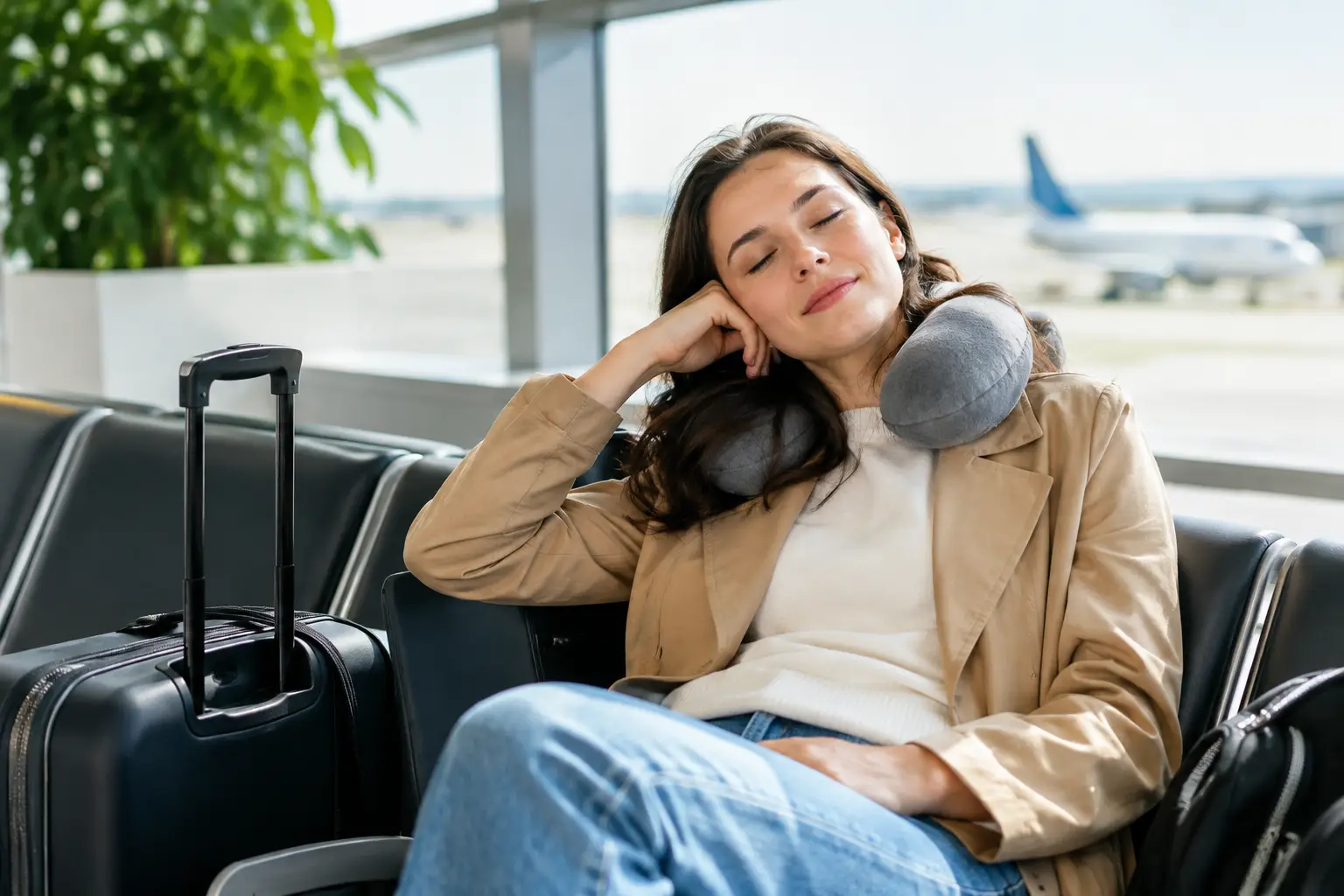
A long flight can leave you feeling strangely disconnected from your own body. Your legs feel heavy, your shoulders sit near your ears, your skin feels dry, and even a beautiful first morning in Chiang Mai can seem softened by fog. The best treatments for travel fatigue do more than encourage sleep. They help your circulation, muscles, nervous system, and senses settle into the place where you have arrived.
Travel fatigue is not always the same as jet lag. Jet lag is largely about a disrupted body clock, while travel fatigue can come from sitting still for hours, carrying bags, dehydration, airport stress, poor sleep, unfamiliar meals, and a schedule that starts too quickly. A thoughtful recovery plan should meet you where you are: depleted, perhaps overstimulated, and ready to feel comfortable again.
Why Travel Fatigue Settles Into the Body
Even a smooth journey asks a great deal of the body. Air travel often means long periods in a seated position, with hips held still and feet lower than usual. Add a tight seat, a neck bent toward a screen, and a suitcase lifted into overhead storage, and it is easy to understand why travelers arrive with tension through the back, shoulders, calves, and feet.
Dry cabin air and irregular hydration can add to the sluggish feeling. So can the quiet stress of navigating a new airport, changing currencies, arranging transport, and trying to stay alert when your normal bedtime is hours away. None of this means you need an intense fix. In fact, the most restorative approach is often a gentle sequence of water, nourishing food, daylight, rest, and bodywork chosen to suit your energy that day.
The Best Treatments for Travel Fatigue
Traditional Thai Massage for Stiffness and Heavy Limbs
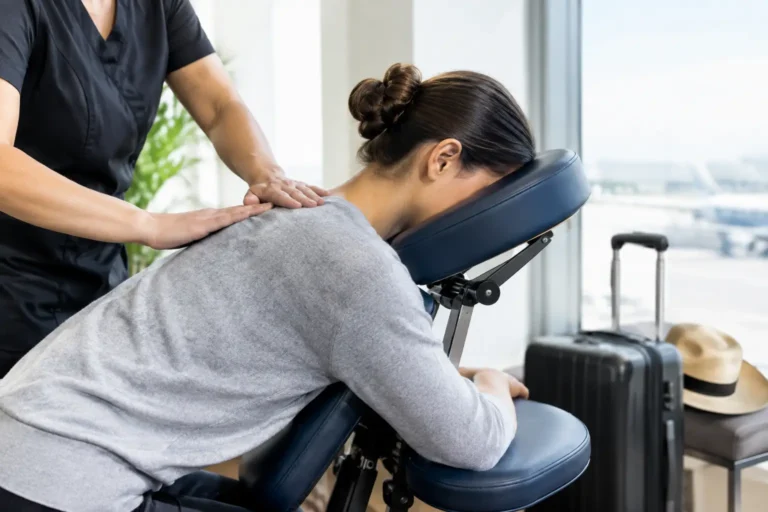
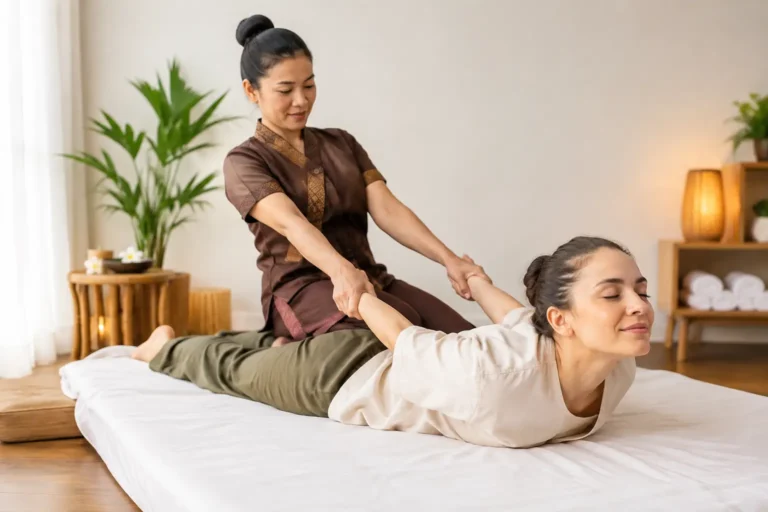
Traditional Thai massage is especially well suited to the physical aftermath of travel. Rather than focusing only on one sore spot, it uses assisted stretches, rhythmic pressure, and mindful movement to encourage the whole body to release. For travelers who feel compressed after a flight, the gradual opening of the hips, legs, back, and shoulders can bring a welcome sense of space.
It is a good choice when you are stiff but still want to feel gently awakened afterward. A skilled therapist can adapt the pressure and stretches to your comfort, which matters after a long journey. If you have arrived exhausted, ask for a softer, slower session rather than assuming deeper pressure will always give better results. Deep work can be wonderful for established muscular tension, but the day after a dehydrating flight may call for a more nurturing touch.
Aromatherapy Oil Massage for Deep Relaxation
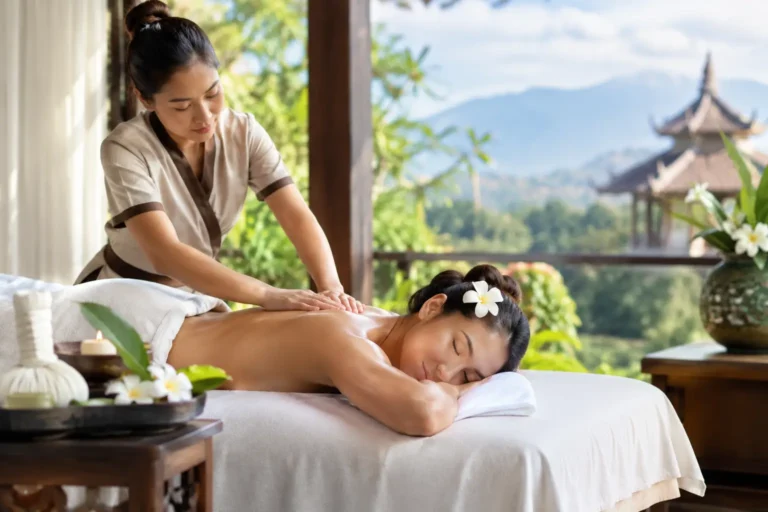
When the mind is racing as much as the body aches, an oil massage can be the more restful option. Smooth, flowing strokes and quality natural oils help soften tension without asking the body to do much in return. The warmth of the treatment, the calming scent of the oils, and the quiet pace can be particularly comforting when you have spent hours surrounded by airport announcements and crowded terminals.
This treatment is ideal for travelers who feel wired but tired, or who struggle to switch from travel mode into vacation mode. It can also be a lovely first evening ritual, followed by a light meal, water, and an early night. The goal is not to force sleep. It is to give your nervous system fewer reasons to stay on alert.
Foot Reflexology for Tired Feet and Lower-Leg Tension
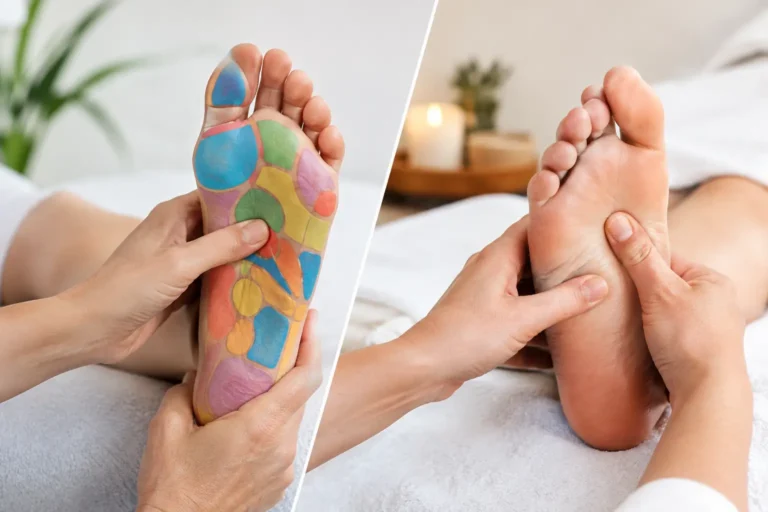
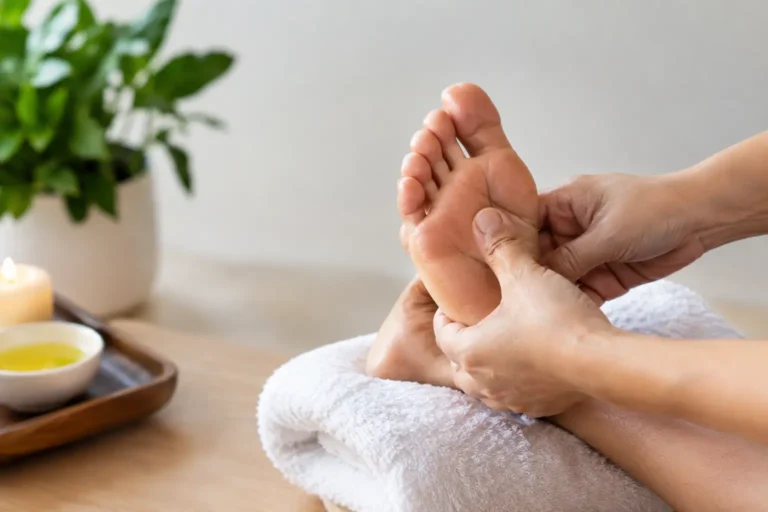
Feet carry more of a trip than we often realize. They stand in security lines, move through unfamiliar streets, and remain still for long stretches on planes and in cars. Foot reflexology offers focused care for feet and lower legs, using pressure and massage techniques that can leave the whole body feeling calmer and lighter.
It is an excellent choice if you are short on time or have already spent your first day walking around Chiang Mai. A foot treatment can ease that dull, crowded feeling in the soles and calves while creating a surprisingly deep sense of rest. For many travelers, it is also an easy introduction to Thai wellness traditions before choosing a longer full-body treatment.
A Body Scrub and Milk Bath for a Full Reset
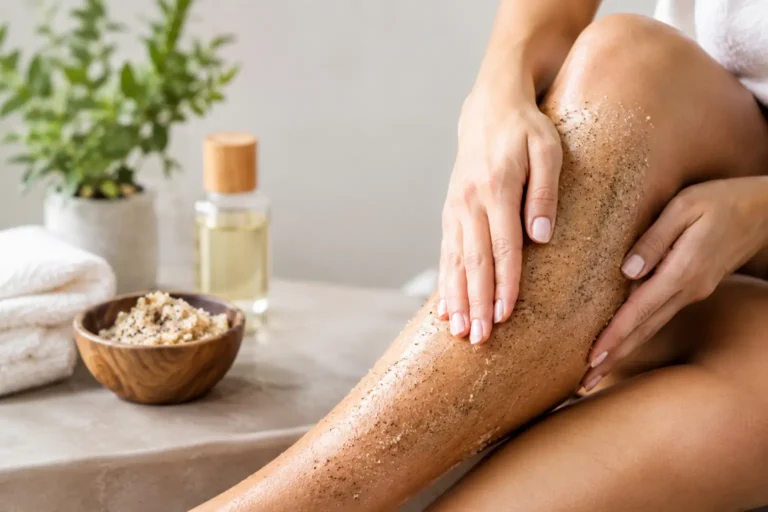
Travel can leave the skin as tired as the muscles. Dry cabin air, sunscreen, heat, and changes in routine may leave it feeling dull or tight. A gentle body scrub followed by a soothing milk bath is not a cure for jet lag, but it can be a meaningful part of recovery. It refreshes the skin, encourages you to slow down, and turns basic self-care into a moment of complete attention.
This kind of ritual works particularly well after you have had time to hydrate and settle into your accommodation. The warm water and soft textures create a transition between the pace of travel and the slower rhythm you want from your stay. For guests who want restoration with a little indulgence, pairing a scrub or bath with a relaxing massage offers care from head to toe.
Facials and Scalp Care for an Overstimulated Mind
Not all fatigue lives in the neck and legs. Sometimes the clearest sign of travel strain is a tight jaw, a furrowed brow, or the inability to stop thinking about the next reservation. A facial or scalp-focused treatment offers a different kind of relief: stillness, gentle touch, and a pause from decisions.
Natural products and a peaceful treatment room can help bring moisture and comfort back to travel-worn skin, while massage around the face, scalp, and temples can feel deeply calming. Choose this option when your body feels mostly fine but your mind has not yet arrived. It also pairs beautifully with a shorter foot massage when you want to feel polished and rested without booking a full day of treatments.
Build a Recovery Ritual Around Your Treatment
A massage is most effective when it is part of a kinder first-day plan. Drink water before and after your treatment, but do not rely on water alone if you have barely eaten. A simple nourishing meal with protein, fruit, and something salty can help you feel more balanced. Keep alcohol light, especially if you are already dehydrated or hoping for good sleep.
Daylight is another quiet ally. If you arrive during the day, spend a little time outside at a comfortable pace before your appointment. A gentle walk can help circulation and give your body useful cues about local time. Avoid turning that walk into an ambitious sightseeing mission. The temple, market, or café you miss on arrival day will still be there when you feel more present.
After bodywork, give yourself a soft landing. Choose a relaxed evening, a warm shower if desired, and a bedtime close to local time. If you need a nap, keep it brief when possible so it does not make the first night harder. Travelers often feel tempted to fill every hour, but a deliberately unhurried afternoon can make the rest of a trip more enjoyable.
Choosing the Right Pressure and Package
The best treatment depends on how you feel, not simply on how long you have traveled. Choose traditional Thai massage if you feel stiff and want movement. Choose aromatherapy oil massage if your body is tense but your energy is low. Choose foot reflexology when your feet and calves need attention, or when you want a shorter restorative pause. A scrub, bath, or facial can be the finishing touch when you want to feel renewed in a more sensory way.
If you have several days in Chiang Mai, an extended spa package can offer a more complete reset by combining massage with elements such as herbal care, a body scrub, bath ritual, refreshments, or facial treatment. At Malinda Thai Massage, this more spacious approach allows each stage to support the next, rather than treating fatigue as a single knot to be worked out quickly.
Be open with your therapist about recent travel, sensitive areas, old injuries, pregnancy, or how much pressure feels right. If you have significant swelling in one leg, chest pain, shortness of breath, severe headache, fever, or symptoms that feel unusual for you, seek medical care rather than booking a massage. Wellness treatments support ordinary travel weariness, but they are not a substitute for medical attention.
Your first day away does not have to prove how much you can fit in. Let it be the day you drink water slowly, breathe more deeply, and allow capable hands to ease the journey from your shoulders. When the body feels cared for, the destination has a way of opening up around you.