EN
 ZH
How to Soothe Tired Feet After a Long Day
A full day on Chiang Mai’s walking streets, hours spent standing at work, or one too many steps in sandals can leave your feet feeling hot, heavy, and strangely tired all the way up your legs. Knowing how to soothe tired feet is not only about finding quick relief. It is a small act of care that can help your whole body settle after movement, travel, or a demanding day.
Your feet carry you through nearly every part of life, yet they are often the last area to receive attention. A few thoughtful rituals can ease everyday discomfort, support relaxation, and turn the end of the day into a more restorative pause.
Begin by taking the pressure off
The simplest first step is to stop asking tired feet to do more. Sit or lie down and elevate your feet on a cushion so they rest slightly above the level of your heart. This position may help reduce the feeling of fullness that can follow long periods of walking, standing, or sitting on a flight.
Give yourself 10 to 15 quiet minutes. Loosen tight socks, remove shoes, and let your toes spread naturally. If you have been wearing narrow shoes or high heels, this brief freedom can feel especially welcome. Take a few slow breaths while you rest. Tension in the feet often arrives alongside tension in the calves, hips, shoulders, and jaw.
If your feet feel swollen after a long journey, avoid immediately putting them back into restrictive footwear. Choose soft, supportive sandals or slippers when you need to move around the room.
Use warmth when your feet feel stiff and weary
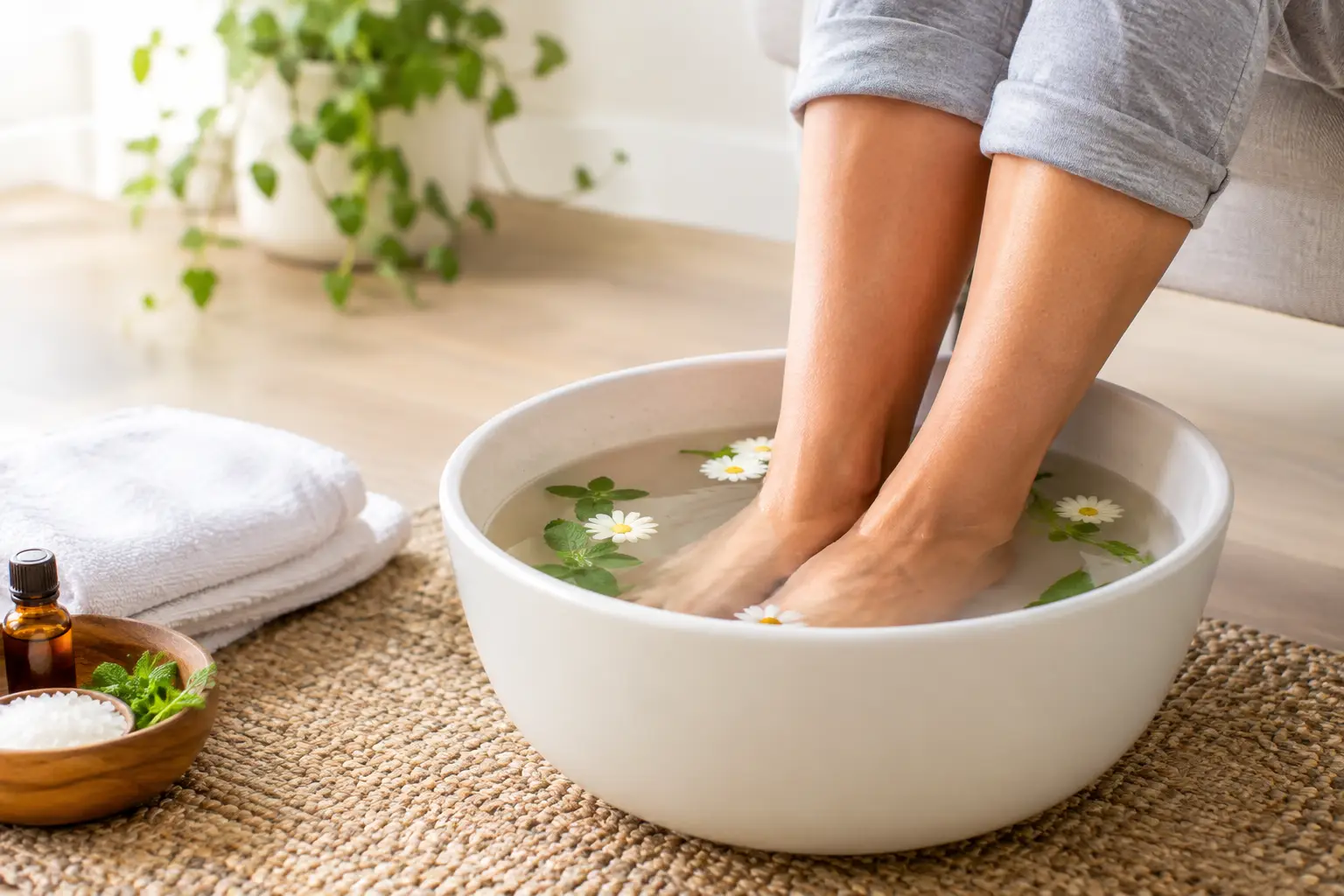
A warm foot soak is one of the most comforting ways to soothe tired feet at home. Fill a basin with comfortably warm water, not very hot water, and soak for 10 to 15 minutes. The warmth encourages the muscles to relax and creates a gentle transition from a busy day into rest.
For a more spa-like ritual, you might add a small amount of Epsom salt, a few slices of fresh ginger, or a mild foot soak made for sensitive skin. A light herbal scent can make the experience feel more calming, but it should never overpower you. If you have cuts, irritated skin, diabetes, reduced sensation in your feet, or circulation concerns, ask a health professional which soak practices are appropriate before using heat or fragranced products.
Dry your feet carefully afterward, especially between the toes. Apply a nourishing lotion or natural oil while the skin is still slightly damp, then put on clean cotton socks if your feet tend to become dry overnight.
When cool relief is the better choice
Warmth is not always the answer. If your feet feel noticeably hot, puffy, or irritated after a humid day or a long walk, a cool compress may feel better. Wrap a cold pack in a thin towel and rest it gently against the soles or tops of your feet for short periods. Never place ice directly on the skin.
This is a good example of why foot care is personal. Stiff, tight feet often enjoy warmth, while overheated feet may prefer cooling relief. Listen to the sensation rather than following one ritual out of habit.
Massage the soles, arches, and calves slowly
A few minutes of massage can transform tired feet, particularly when you work with unhurried pressure. Start by warming a little lotion or oil between your palms. Hold one foot with both hands and use your thumbs to make slow circles across the sole, beginning at the heel and moving toward the ball of the foot.
Spend extra time through the arch if it feels tight. Then gently press and release the padded area beneath each toe. Pull each toe lightly, one at a time, and finish with long strokes from the heel toward the toes. The goal is comfort, not intensity. Deep pressure can feel satisfying for some people, but it should never create sharp pain, tingling, or numbness.
Do not forget the calves. The feet and lower legs work together with every step, so a tired sole may be connected to a tight calf. Use both hands to glide upward from the ankle toward the knee with light to moderate pressure. This can feel especially restorative after a day of sightseeing, exercise, or standing on hard floors.
For deeper relaxation, a professional foot reflexology or Thai-style foot massage offers focused care in a tranquil setting. At Malinda Thai Massage, this kind of treatment can be a lovely choice when you want more than a quick rubdown: a quiet space, quality oils, skilled hands, and time to let the entire body unwind.
Release tension with gentle stretches
Stretching is most useful when it is slow and consistent. After sitting down, point your toes away from you, then draw them back toward your shins. Repeat several times without forcing the movement. Next, circle each ankle in both directions.
To stretch the underside of your foot, roll it over a tennis ball, massage ball, or chilled water bottle. Keep the pressure easy at first and roll from heel to forefoot for about a minute on each side. A chilled bottle is particularly pleasant when your soles feel warm after walking, while a softer ball may be kinder if your feet are tender.
A wall calf stretch can also help. Place your hands against a wall, step one foot back, and keep that heel comfortably grounded as you bend the front knee. Hold for 20 to 30 seconds, then switch sides. Avoid bouncing. Your feet will often feel more at ease when the calves have space to lengthen.
Give your shoes an honest review
Sometimes the most effective solution begins before the next long day. Shoes that rub, pinch the toes, lack cushioning, or have worn-down soles can repeatedly strain your feet. Beautiful footwear has its place, but not every pair is suited to a full day of exploring or standing.
For long walks, choose shoes with enough room for your toes, stable support, and socks that keep moisture under control. If you know you will be walking far, alternate shoes when possible rather than wearing the same pair every day. Travelers often find that their feet swell slightly in heat and during long flights, so a familiar shoe that fits perfectly at home may feel much tighter later in the day.
This does not mean every shoe must look athletic. It means matching the shoe to the activity, then giving your feet recovery time afterward.
Make a small evening ritual of it
Foot care works best when it becomes regular rather than reserved for the moment you can barely stand. Even five minutes before bed can make a difference. Try a warm rinse, a little lotion, a minute of massage, and a few ankle circles while you settle into the evening.
Pair the ritual with another calming cue, such as herbal tea, quiet music, or a warm shower. The point is not to create another task to complete perfectly. It is to let your body recognize that the day is ending and that it is safe to soften.
Know when tired feet need more attention
Everyday soreness usually improves with rest, supportive shoes, gentle movement, and massage. But persistent or severe foot pain deserves care beyond a home ritual. Seek advice from a qualified medical professional if you have swelling in only one foot, sudden or increasing pain, redness, warmth, numbness, a wound that is slow to heal, pain after an injury, or symptoms that do not improve with rest.
People with diabetes, neuropathy, arthritis, vascular conditions, or a history of foot problems should be particularly careful with heat, strong massage, and self-treatment. Professional wellness care can be wonderfully relaxing, but it is not a substitute for medical assessment when something feels unusual.
Your feet do not need an elaborate reason to be cared for. After a day of movement, let them rest, warm them or cool them according to what feels right, and offer a few patient minutes of touch. That small kindness can leave you feeling lighter, steadier, and ready to enjoy tomorrow’s steps.