EN
 ZH
Swedish Versus Thai Bodywork for Your Needs
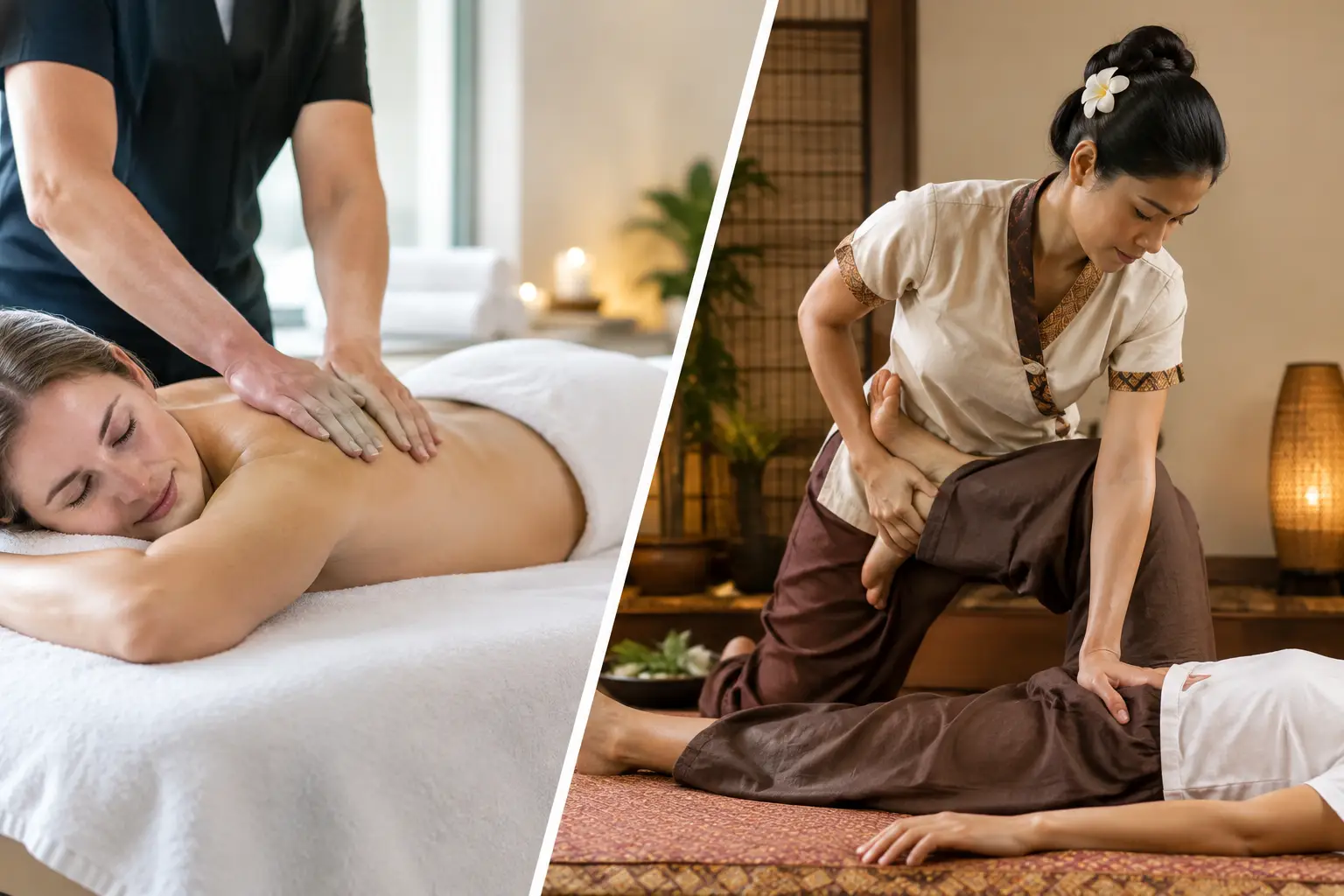
A quiet hour can feel very different depending on the style of touch you choose. In Swedish versus Thai bodywork, the main difference is not simply how much pressure is used. It is the whole experience: whether you rest under a sheet on a massage table, or move through assisted stretches on a floor mat; whether warm oil glides across the skin, or rhythmic pressure works through comfortable clothing.
Both can leave you feeling lighter, calmer, and more at ease in your body. The right choice depends on what your muscles need, how you prefer to relax, and what kind of restoration you want from your time at the spa.
Swedish Versus Thai Bodywork: The Essential Difference
Swedish massage is designed around flowing, oil-based strokes. You lie on a massage table, comfortably draped, while the therapist uses long gliding movements, gentle kneading, and focused pressure to encourage the body to soften. The pace is usually unhurried and continuous, creating a deeply restful rhythm.
Thai bodywork follows a different tradition. Often called Thai massage, it is typically received fully clothed in loose, comfortable spa clothing on a cushioned mat. The therapist uses hands, thumbs, forearms, elbows, and sometimes feet to apply measured pressure along the body. Assisted stretches are woven into the session, moving the hips, shoulders, legs, and spine through ranges that may be difficult to reach alone.
Neither approach is inherently better. Swedish massage offers a cocooning, quiet form of comfort. Thai bodywork tends to feel more interactive and energizing, even when the room itself is peaceful and still.
What a Swedish Massage Feels Like
Swedish massage is often the natural choice when your idea of restoration involves settling in, closing your eyes, and letting the day fall away. Quality oil or lotion reduces friction and allows the therapist’s hands to move in long, even strokes across the back, shoulders, legs, and arms. These strokes can be light and soothing or more focused where everyday tightness has gathered.
The experience is especially appealing after a long flight, a full day of sightseeing, or a demanding workweek. Many guests enjoy the warmth of the table, the soft scent of natural oils, and the feeling that there is nothing to do but breathe. It can be an ideal treatment for someone who is new to massage or simply craving uncomplicated relaxation.
Pressure can be adjusted. A Swedish treatment does not have to be very light, and a skilled therapist can spend more time on firm shoulders, tired calves, or a tight lower back. Still, the defining feature is fluidity rather than intense, static pressure. The goal is a smooth sense of release, not a series of deep stretches.
Swedish massage also suits guests who prefer draping and a familiar table-based treatment. If you feel more comfortable with a private, warm, oil massage and minimal movement during the session, this style may feel immediately welcoming.
When Swedish massage may be the better fit
Choose Swedish massage when your body feels overstimulated, your mind needs quiet, or you would like a gentle return to ease. It also works beautifully as part of a longer spa ritual, followed by a body scrub, facial, steam, or a peaceful refreshment. The massage becomes one nourishing part of a more complete pause.
What Thai Bodywork Feels Like
Thai bodywork has a distinctly different rhythm. Rather than receiving touch passively from start to finish, you are gently guided through a sequence of pressure and assisted movement. A therapist may support one leg while encouraging a hip stretch, open the chest and shoulders, or use slow pressure through the feet and palms.
The stretches are never meant to be a performance. You do not need to be flexible, athletic, or familiar with yoga. A thoughtful therapist works within your comfortable range and adapts the session to your body. Communication matters here. If a stretch is too strong, a simple request for less intensity helps the therapist adjust immediately.
Many guests appreciate Thai bodywork when they feel stiff from walking, cycling, carrying bags, sitting for long periods, or spending hours on a plane. The combination of pressure and movement can create a pleasing sense of space through the hips, back, and shoulders. It often leaves people feeling both grounded and refreshed rather than sleepy.
Because Thai massage is usually given without oil, it is also practical for guests who would rather remain dressed or who need to continue with their day afterward. The treatment can feel wonderfully complete without the need for a shower or a change of plans.
When Thai bodywork may be the better fit
Thai bodywork is a lovely choice when you want more movement, enjoy a focused sense of pressure, or feel that your body needs to be gently awakened as well as relaxed. It can be particularly satisfying for active travelers exploring Chiang Mai, as well as professionals who spend long hours at a desk and notice stiffness through the neck, hips, and legs.
It may not be the first choice on a day when you want only stillness. If you are exhausted, sensitive to stretching, or mainly hoping for an oil-based spa escape, Swedish massage may offer the softer experience you are looking for.
Pressure Is Personal, Not a Test of Strength
A common misunderstanding is that Thai massage is always intense and Swedish massage is always gentle. In reality, both are adaptable. The quality of a treatment comes from attentive listening, not from how much pressure you can tolerate.
Thai bodywork can be slow, mild, and deeply calming. Swedish massage can include focused deep-tissue work when certain areas need extra attention. Your therapist should ask about your preferences and respond to what your body communicates throughout the session.
There is no prize for enduring discomfort. Productive pressure may feel strong, but it should remain manageable and never feel sharp, alarming, or forced. Let your therapist know if you are sensitive in a particular area, recovering from an injury, pregnant, or managing a health concern. When in doubt, consult an appropriate healthcare professional before booking bodywork.
Choosing Based on Your Day, Not Just Your Muscles
Your plans after the treatment can help guide your choice. Swedish massage is ideal when you can linger in the relaxed afterglow, perhaps with tea and a little quiet before returning to your evening. The oils, warmth, and table-based comfort invite you to slow down.
Thai bodywork can be especially appealing before a relaxed dinner, a gentle walk, or another day of travel. Its movement-based approach may leave you feeling more open and alert. Of course, every person responds differently. Some guests feel ready to explore after Thai massage, while others want a peaceful nap after either style.
Consider your emotional needs as well. If you have been making decisions all day, moving through airports, or carrying the invisible weight of a busy schedule, Swedish massage can create welcome stillness. If you feel mentally foggy and physically compressed, Thai bodywork may offer a more enlivening reset.
Make the Experience Your Own
The most restorative treatment is one that honors your comfort from the first moment. Arrive a little early if possible, drink some water, and share a few simple details with your therapist: where you feel tight, whether you prefer light or firm pressure, and if you would like more attention on your feet, shoulders, or back.
At Malinda Thai Massage, the setting is intended to make that choice feel less rushed. Natural oils, tranquil surroundings, and thoughtfully paired spa treatments allow guests to shape their visit around what they truly need, whether that is a focused hour of bodywork or a longer ritual of relaxation and care.
If you are still unsure, start with the feeling you want to carry with you when you leave. Choose Swedish massage for warmth, stillness, and flowing comfort. Choose Thai bodywork for supported movement, grounded pressure, and a refreshed sense of space. Your body will often tell you which invitation sounds most welcome.